Inside Final Four Reporting: I Shot My Shot and Found the Story Outside the Stat Sheet
Lessons from a Final Four moment on how to see, report, and write the human story you didn’t expect—beyond what the stats can capture. Taking you inside of how my story on Maddy McDaniel came together

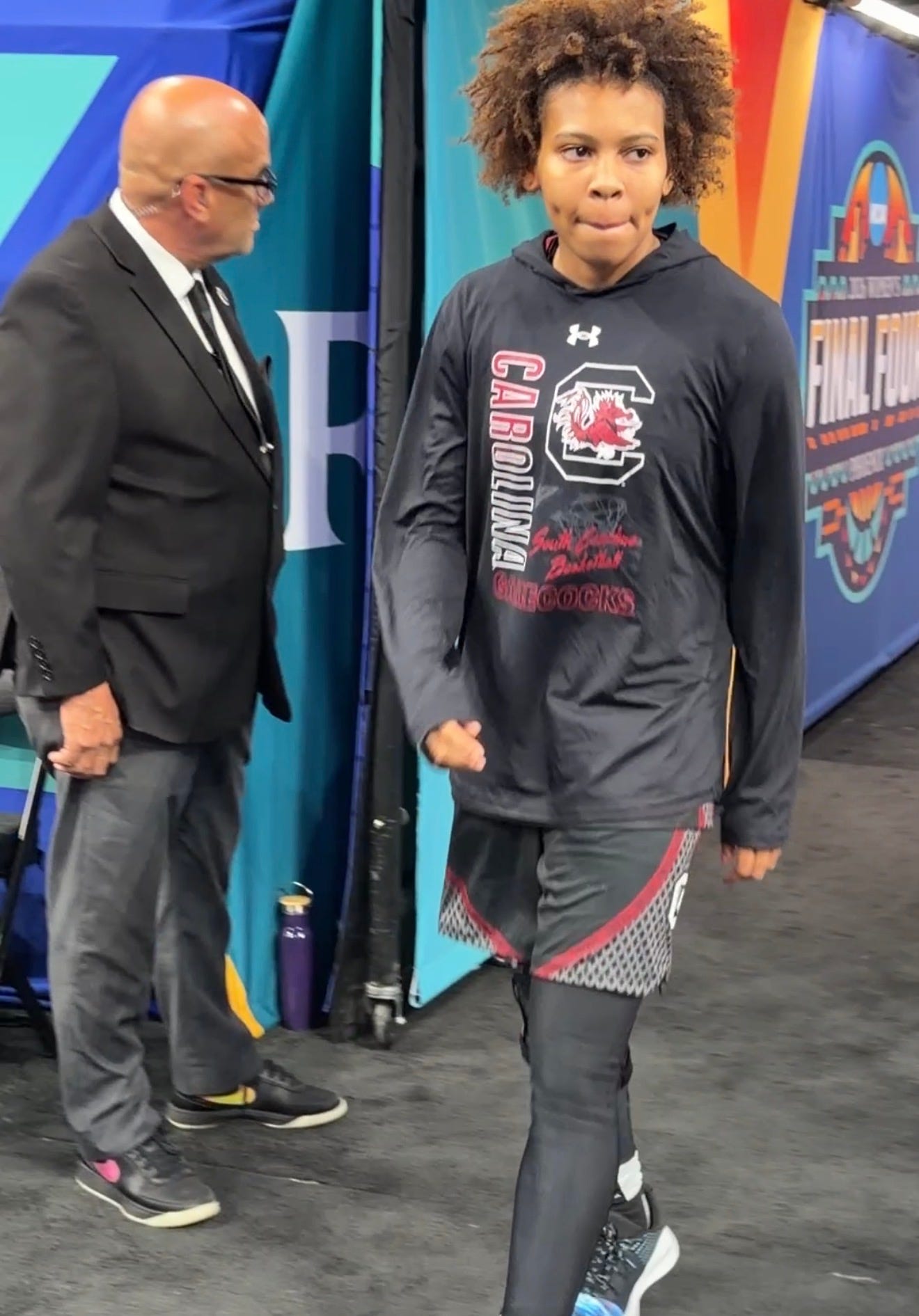
Covering my third straight NCAA women’s Final Four for The IX Basketball was a thrill, but one story pulled me back to the heart of why I do this work.
Let me take you behind the scenes of how I reported a story on South Carolina sophomore guard Maddy McDaniel—a story that revealed layers of her humanity I hadn’t seen before. Stories like this aren’t born overnight. They grow slowly, trust building in quiet moments, shaped by relationships like the one I’ve formed with South Carolina’s remarkable women’s basketball associate athletic director / communications and public relations, Diana Koval.
That groundwork became especially important when, the Saturday before the championship game, I realized that locker rooms were closed and only select players were available to the media—usually just the five starters. I had already committed to writing my advance for Sunday’s title game on McDaniel’s impact in South Carolina’s national semifinal win over UConn. In helping to end UConn’s 54-game winning streak, she logged three points, three assists, and two rebounds in 16 minutes—a stat line that only hinted at her true impact.
My goal was to show why her effort mattered, even if the stats didn’t jump out. McDaniel wasn’t available. Thinking through backup plans, I asked Koval if I could talk to McDaniel briefly to highlight her impact. There were no guarantees, and honestly, I was already preparing for ask her teammates about her impact.
My request paid off and relief washed over me like cool water.
Koval brought McDaniel out to meet me, just outside the locker room, for a one-on-one conversation. That moment was built on trust, the kind that grows quietly over time and three years of covering South Carolina in the Final Four. Koval juggles countless requests for Dawn Staley and her players, but she made space for this one.
From there, I chose not to focus on the box score but on its meaning. I wrote that “every sprint… feels like a thank-you note written in motion”—about purpose, gratitude, and emotional weight.
That’s what I believe at the core: storytelling lives in the spaces around the box score, not inside its lines. You can read a role player’s stats in a heartbeat, but when you understand the why behind her movement, you start to feel it. That’s where connection takes root.
To go deeper, I focused on capturing the moment inside the moment—not just what happened, but how it unfolded. The arena was buzzing when UConn cut it to 46–44. McDaniel recognizes the opening in transition. The layup. The 16-4 run that followed. Those are the five seconds that shift a game, and often, a story. Too often, we summarize outcomes. The real work is slowing the moment down while it is still alive and letting the reader sit inside it. That is how you write the inflection point, not just the result.
I wanted to make the invisible visible. McDaniel’s value lived beyond the numbers—in the rest she gave Raven Johnson, the tempo she set, the choices she made. It was the game within the game. By shining a light on these moments, the story widens our view of what matters.
The emotional anchor—her mother’s cancer diagnosis, survival, and their daily calls—was narrative infrastructure. It was the pulse behind everything she did. This gives readers something lasting beyond a single game.
I knew surface-level information about her background from what was on her bio page on the website before the interview. That changed. When I asked, “Who inspires you and what’s your why?” she began to trust me and shared personal details, including that she had a 75% chance of being born blind because her mom was diagnosed with ovarian cancer while pregnant.
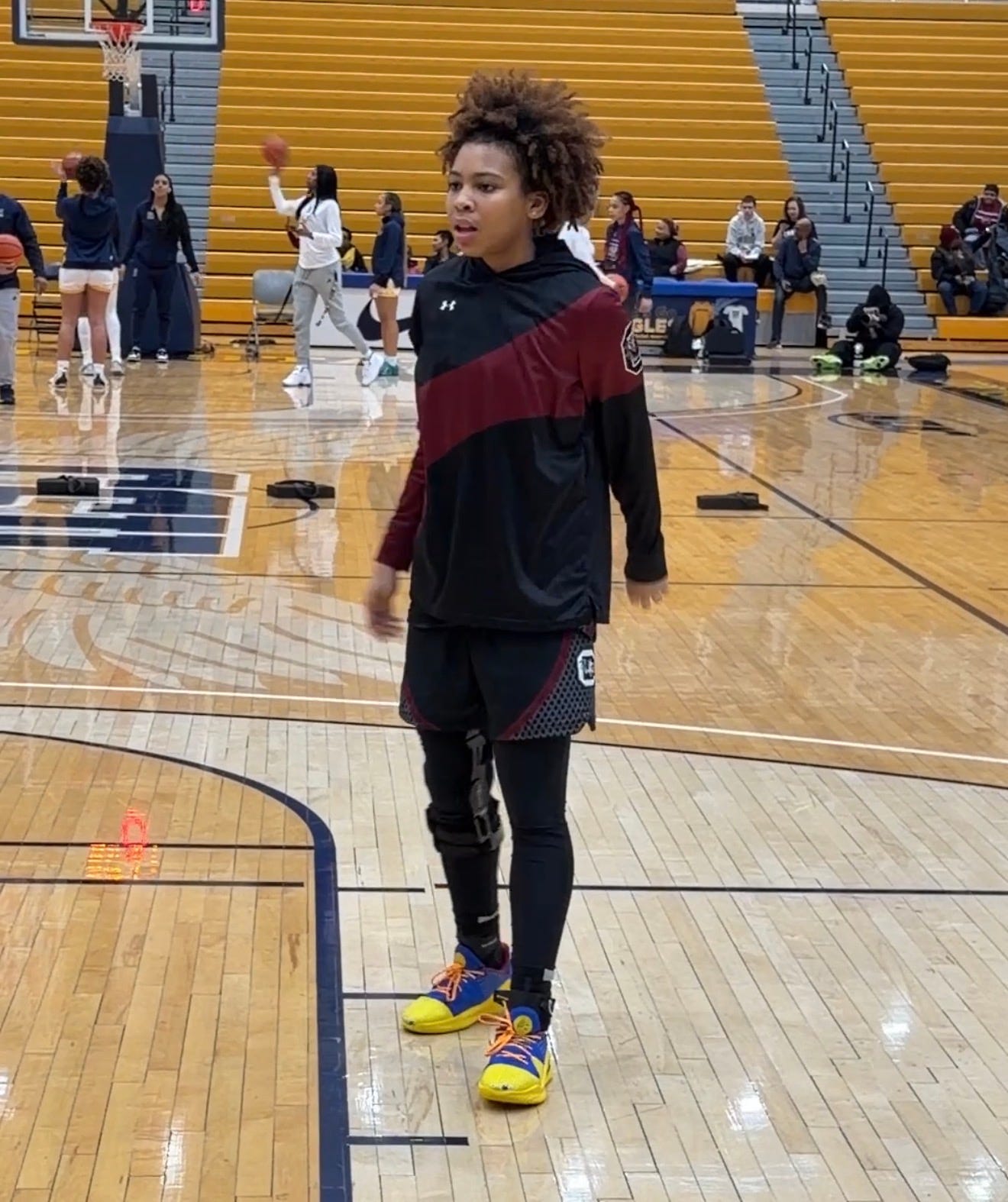
I wanted to trace her evolution: the suspension, the waiting, the readiness, the moment. It’s not a single snapshot—it’s an arc of adversity, adjustment, and ascent. Writing this way builds legacy as it unfolds.
Most of all, I wanted her voice to breathe—not trimmed or paraphrased, but felt. When she says, “I could never repay her…” it lands differently. That’s the difference between quoting words and capturing breath.
McDaniel played 16 minutes. The story makes her feel essential, as Staley noted. That is intentional. Strategic storytelling expands who matters and why, with care and accuracy, rather than just celebrating the loudest stars.
In the end, it always circles back to this purpose.
This is the kind of storytelling the game needs as women’s basketball grows and new faces fill the stands. Stories should capture moments, meaning, and the threads that tie it all together—giving people something to feel, something to hold.
When it works, the story’s impact lingers long after the final buzzer. It stays.